Journal

Posts tagged "AI"

5 posts

May 2023

Autoencoders: Compression, Reconstruction, and Beyond

NOTE: This post is part of my Machine Learning Series where I discuss how AI/ML works and how it has evolved over the last few decades.

Autoencoders are a type of neural network architecture used for tasks such as dimensionality reduction, feature extraction, and data denoising. With their ability to learn efficient representations of data, autoencoders have found applications in various fields, from image processing to anomaly detection. In this post, we'll explore the structure and functionality of autoencoders and delve into their use cases.
Understanding Autoencoders

An autoencoder consists of two primary components: an encoder and a decoder. The encoder compresses the input data into a lower-dimensional representation called the latent space, while the decoder reconstructs the original data from this latent representation.

Autoencoder: The Encoder-Decoder Architecture

Encoder: Data Compression

The encoder is a neural network that receives input data and reduces its dimensionality, creating a compressed representation in the latent space. This process captures the most important features of the data.

Decoder: Data Reconstruction

The decoder is another neural network that takes the compressed representation and reconstructs the original data. The goal is to produce a reconstruction that closely resembles the original input.

Training: Minimizing Reconstruction Error

Autoencoders are trained to minimize the reconstruction error between the original input and the reconstructed output. Common loss functions include mean squared error (MSE) and binary cross-entropy.

Variants of Autoencoders

Variational Autoencoders (VAEs)

Variational autoencoders (VAEs) are a probabilistic extension of autoencoders that learn the distribution of the latent space. VAEs are used for tasks such as image generation and unsupervised learning.

Variational Autoencoders Explained

Denoising Autoencoders

Denoising autoencoders are trained to reconstruct input data that has been intentionally corrupted with noise. They are effective for image denoising and removing artifacts.

Denoising AutoEncoders In Machine Learning

Applications of Autoencoders

  • Dimensionality Reduction: Autoencoders can reduce the dimensionality of data while preserving essential features, similar to PCA.
  • Anomaly Detection: Autoencoders can detect anomalies by measuring high reconstruction error for atypical data points.
  • Image Generation: Variational autoencoders can generate new images by sampling from the learned latent space.

TL;DR

May 11, 2023 Read more

Exploring the Different Types of Neural Networks

NOTE: This post is part of my Machine Learning Series where I’m discussing how AI/ML works and how it has evolved over the last few decades.

Neural networks are the foundation of many artificial intelligence and machine learning applications. There are several types of neural networks, each designed to address specific types of problems. In this post, we'll explore the most common types of neural networks and their applications.

Feedforward Neural Networks (FNNs)

Feedforward neural networks, also known as FNNs, are the simplest type of neural network. They consist of an input layer, one or more hidden layers, and an output layer. Information in FNNs flows in one direction, from the input to the output.

 Understanding Feed Forward Neural Networks With Maths and Statistics 

Convolutional Neural Networks (CNNs)

Convolutional neural networks (CNNs) are designed for image processing and computer vision tasks. CNNs use convolutional layers to scan images for local patterns, and pooling layers to reduce spatial dimensions. They excel at image classification and object detection.

A Comprehensive Guide to Convolutional Neural Networks — the ELI5 way

Recurrent Neural Networks (RNNs)

Recurrent neural networks (RNNs) are designed to process sequential data, such as time series or text. RNNs have connections that loop back, allowing them to capture temporal dependencies. Variants such as LSTMs and GRUs address challenges like vanishing gradients.

Understanding RNN and LSTM

Generative Adversarial Networks (GANs)

Generative adversarial networks (GANs) consist of a generator and discriminator network that engage in an adversarial game. The generator creates synthetic data, while the discriminator evaluates its authenticity. GANs have applications in image synthesis and data augmentation.

 Understanding Generative Adversarial Networks (GANs)

Autoencoders

Autoencoders are neural networks used for dimensionality reduction and feature extraction. They consist of an encoder that compresses input data and a decoder that reconstructs the original data. Autoencoders are used for image denoising and anomaly detection.

 Applied Deep Learning - Part 3: Autoencoders

TL;DR

May 5, 2023 Read more

The Evolution of Computer Vision: A Decade of Innovation and Progress

NOTE: This post is part of my Machine Learning Series where I’m discussing how AI/ML works and how it has evolved over the last few decades.

Computer vision, the field of AI that enables computers to interpret and understand visual information from the world, has undergone significant advancements over the past decade. The ability to analyze images and videos, recognize objects, and understand visual scenes has opened up a multitude of applications in fields such as healthcare, autonomous vehicles, and security. In this blog post, we will explore the key milestones and breakthroughs that have shaped the evolution of computer vision over the last ten years.

The Rise of Deep Learning in Computer Vision

ImageNet and the Convolutional Neural Network (CNN) Revolution

One of the most transformative moments in computer vision came in 2012 with the ImageNet Large Scale Visual Recognition Challenge (ILSVRC). The competition, which involved classifying images into 1,000 different categories, was won by AlexNet, a deep convolutional neural network (CNN) designed by Alex Krizhevsky, Ilya Sutskever, and Geoffrey Hinton. AlexNet significantly outperformed traditional computer vision algorithms, marking the beginning of the deep learning revolution in computer vision.

Object Detection and Segmentation Advances

Following the success of AlexNet, new architectures and techniques emerged for tasks such as object detection and segmentation. Models like R-CNN, YOLO (You Only Look Once), and Mask R-CNN improved the accuracy and speed of object detection and instance segmentation.

The Expansion of Computer Vision Applications

Healthcare and Medical Imaging

Advancements in computer vision have had a profound impact on healthcare, particularly in medical imaging. Deep learning models can now detect diseases from medical scans with accuracy comparable to human experts, aiding in early diagnosis and treatment.

Autonomous Vehicles and Robotics

Computer vision has played a crucial role in the development of autonomous vehicles, enabling them to perceive their surroundings and make safe driving decisions. Additionally, computer vision is used in robotics for tasks such as navigation, manipulation, and human-robot interaction.

The Emergence of Vision Transformers and Self-Supervised Learning

May 3, 2023 Read more

Machine Learning Series: Exploring the World of AI/ML

Machine learning is an exciting and rapidly evolving field that has the potential to transform virtually every industry. From natural language processing to computer vision, machine learning models are becoming an integral part of our daily lives, enabling new levels of automation and understanding. To explore the fascinating world of machine learning and share insights with a broader audience, I am launching a blog series on AI/ML.

In this post, I will discuss the topics I will be covering and what you can expect from the upcoming blog series.

The Topics We Will Explore

Our journey into machine learning has covered a wide range of topics, each diving into a different aspect of this dynamic field:

Introduction

Neural Networks

Deep Learning Hardware

  • Neural Networks and the Power of GPUs and TPUs
  • GPUs and TPUs: Accelerating Machine Learning with Specialized Hardware

Fundamentals of Machine Learning

  • Tensors in Machine Learning: Understanding Multidimensional Arrays
  • Layers in Machine Learning: Building Blocks of Neural Networks
  • Activation Functions: Bringing Nonlinearity to Neural Networks
  • Parameters in ML
  • Model Weights and Checkpoints in Machine Learning
  • Loss Functions in Machine Learning
  • Overfitting in Machine Learning
  • Gradient Descent: Optimization in Machine Learning
  • Hyperparameters and the Art of Tuning: Optimizing ML Models

Natural Language Processing

  • Tokenization: The Key to Understanding Language in NLP
  • Embeddings in Large Language Models
  • Embeddings and Vector Databases in Large Language Models
  • Understanding Perplexity: A Key Metric in Language Modeling
  • Attention Mechanisms in Large Language Models
  • GPT: The Language Model Revolutionizing Natural Language Understanding

...

May 1, 2023 Read more

March 2023

AI and The Potential Risks of Autonomous War Bots

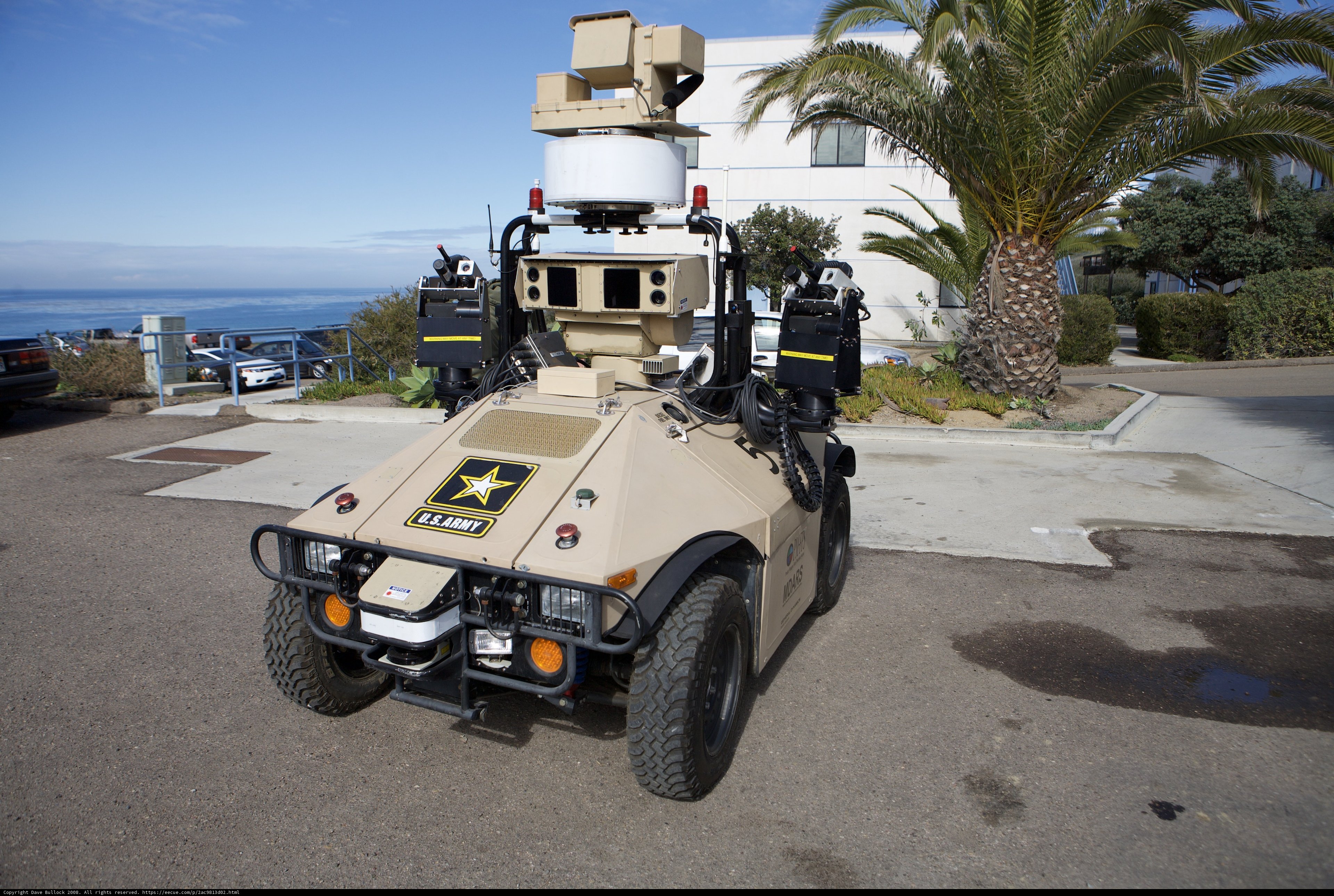
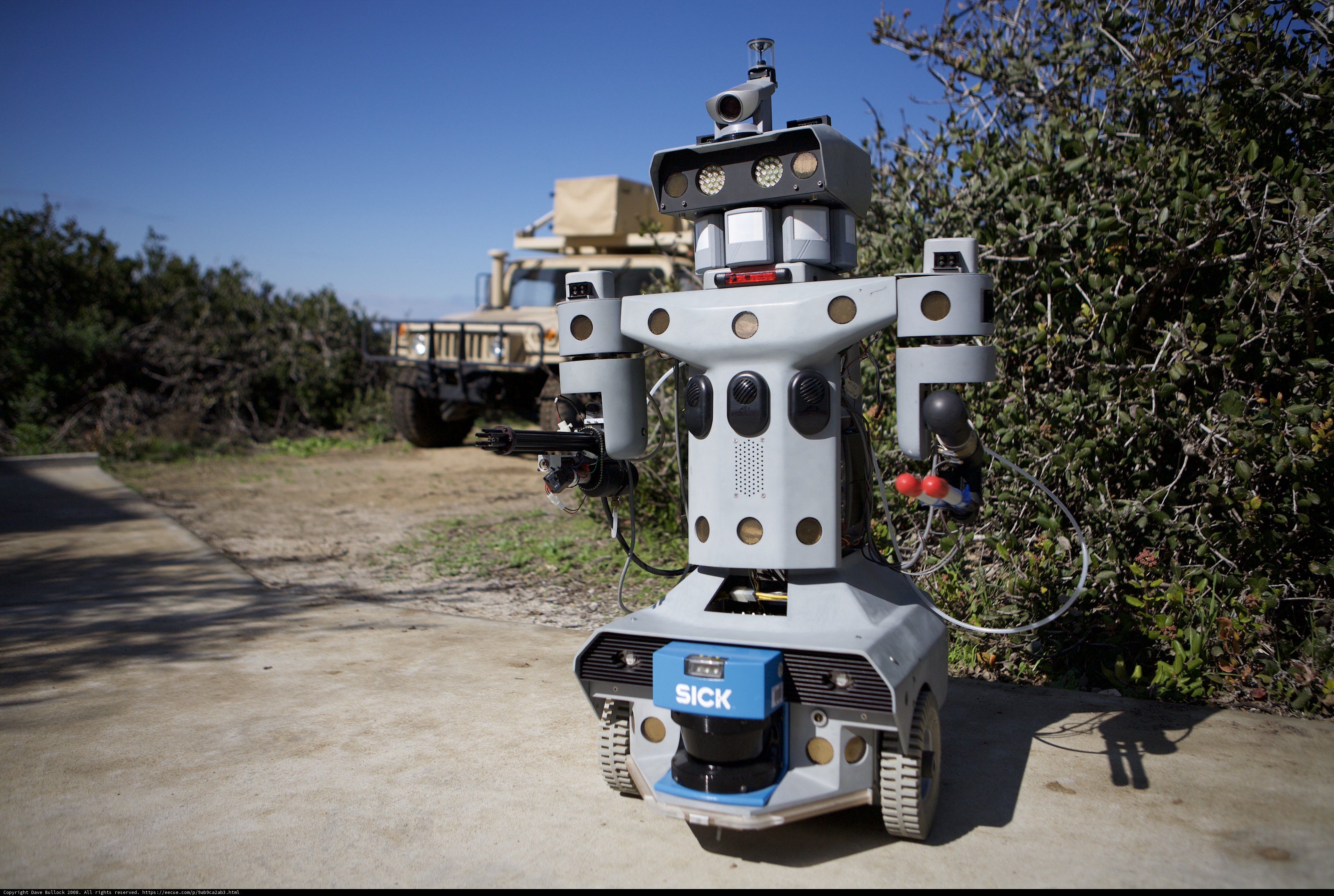
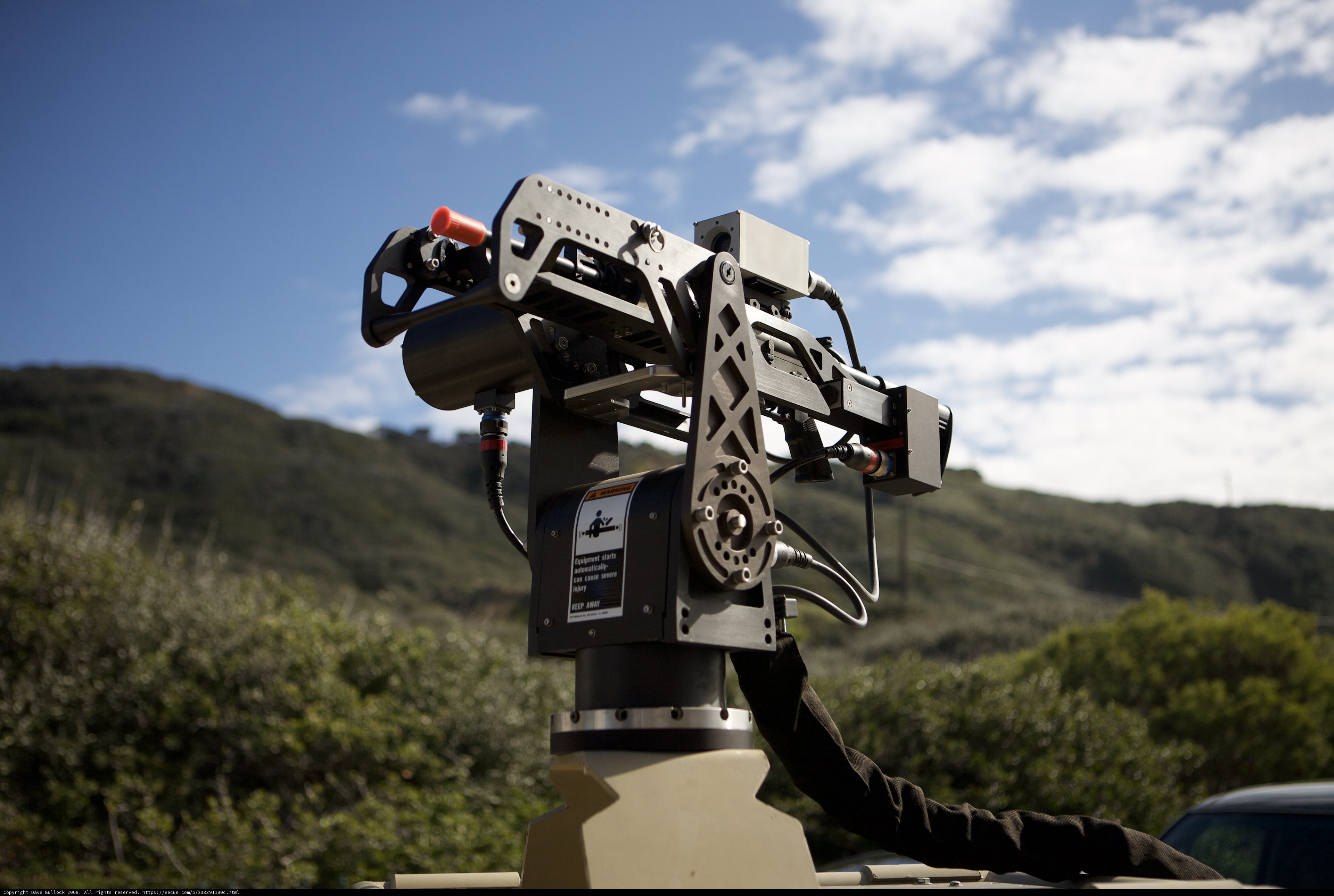
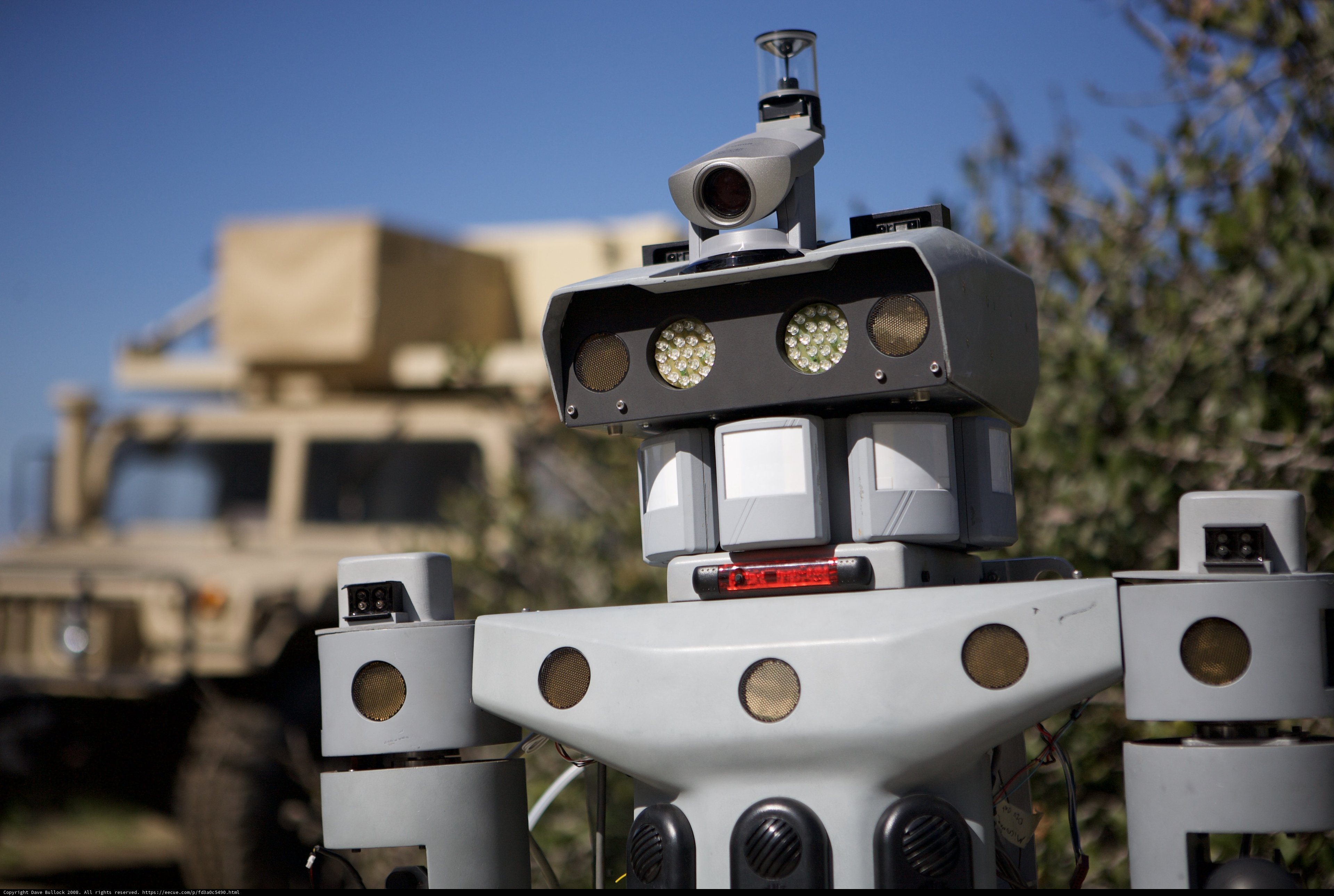
In 2008, I had the opportunity to tour SPAWAR, the Space and Naval Warfare Systems Command, now known as NAVWAR. SPA/NAVWAR is a research and development laboratory for the U.S. Navy. During my visit, I was fascinated by the various autonomous military robots that were being developed and tested there. I photographed the tour and wrote about it for WIRED News.

Fast-forward to 2023, and with the emergence of large language models like ChatGPT and Bing AI, it's possible to imagine how these robots could be controlled using AI in ways that are frankly somewhat terrifying. With great power comes great responsibility, and we must consider the potential risks of relying on AI-powered machines in warfare.

How Large Language Models Could Control Autonomous Robots for War

Large language models like ChatGPT are designed to understand and generate human-like language. They work by training on vast amounts of text data, which enables them to recognize patterns and make predictions about what words are likely to come next in a sentence. With this ability, it's possible to use natural language commands to control autonomous robots on the battlefield.

For example, a commander could use a chatbot interface to ask an autonomous drone to perform a specific task, such as "Scan the area for enemy activity and report back." The drone would then use its onboard sensors to perform the task and send the results back to the commander. This type of interaction could reduce the need for human operators in dangerous situations and provide real-time intelligence to decision-makers.

The Potential Risks of Autonomous War Machines

While the idea of using AI-powered machines in warfare may seem appealing, it's important to consider the potential risks. One major concern is the possibility of unintended consequences. Autonomous robots rely on algorithms and programming to make decisions, and there's always the risk of a bug or glitch causing the machine to behave in unexpected ways. This could lead to unintended harm to civilians or friendly forces.

Another concern is the potential for hackers to gain control of autonomous robots. If an adversary were able to gain access to the communication channels used to control the machines, they could potentially cause havoc on the battlefield. They could redirect drones to attack friendly forces or civilians, or use them for reconnaissance to gain a tactical advantage.

March 9, 2023 Read more